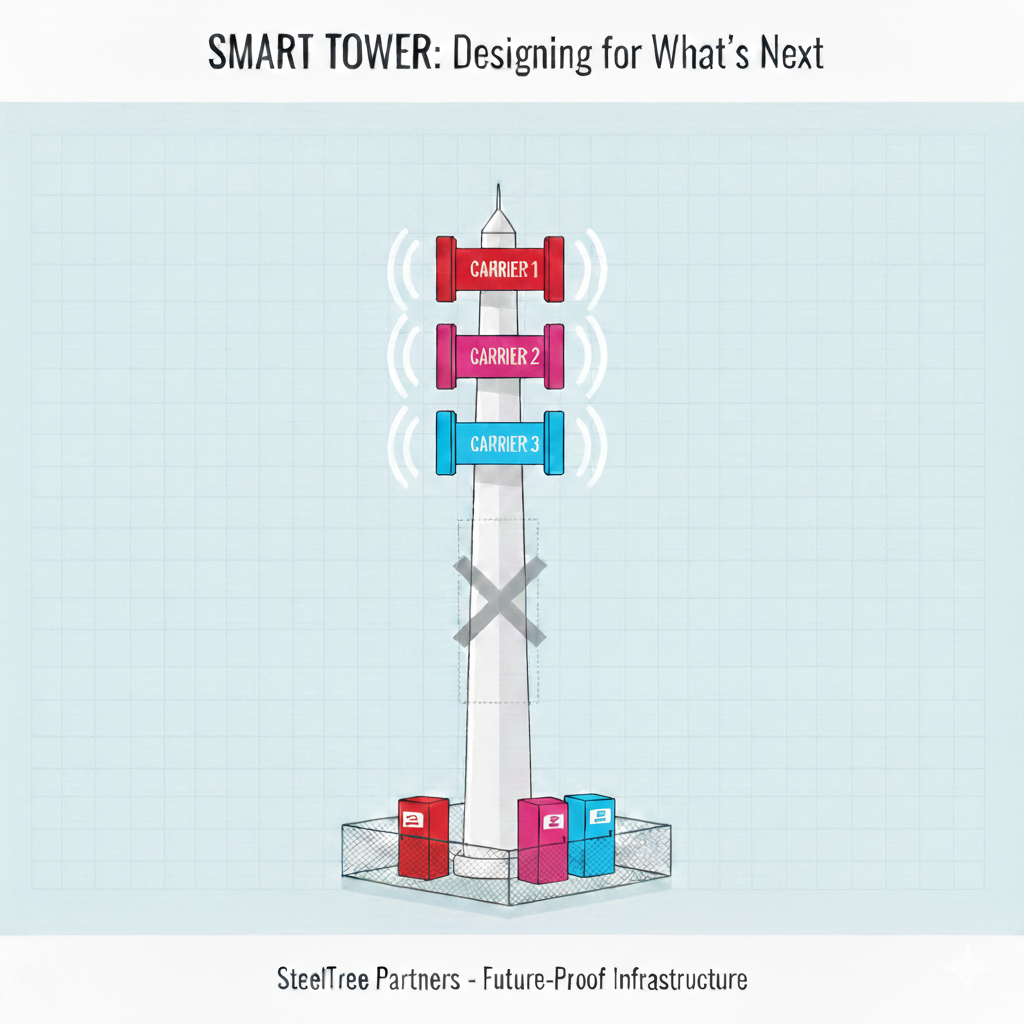
With DISH and UScellular out of the picture, we’re back to three national carriers. For tower owners, that changes the math on how much steel you need in the ground.
The old rule was simple: build for four carriers. But that was before the market consolidated and before 5G got deployed. Now? Most new builds can safely spec for three full carrier arrays – but there’s nuance here.
5G Changed the Loading Game
The heavy lifting is done. The initial 5G rollout meant massive MIMO panels and tons of radio equipment. But we’re seeing the profile shift now – newer mid-band antennas are shrinking in wind load (shorter, narrower, or both) even as they’re getting heavier. More RRUs, more integrated antennas. The constant cycle of loading and rent increases with every amendment? That’s slowing down, though it’s not dead yet.
When to Overbuild (and When Not To)
Even with steel and construction costs where they are, I’m still generally telling people to overspec capacity. Why? Because if you ever plan to sell, that extra structural capacity is almost always accretive to your exit price. Buyers don’t want to mod towers – and if they have to, they’ll discount your price to cover it. That upfront steel cost might sting, but it’s usually cheaper than the haircut you’ll take at exit.
There are exceptions:
- If you’re near existing towers with capacity
- Very rural areas where a second or third carrier is statistically unlikely.
For most builds, three full 5G arrays is the sweet spot. In rural areas, throw 1-2 six-foot microwave dishes into your loading calc just to be safe.