
WISP Tower Owners & Cell Sites
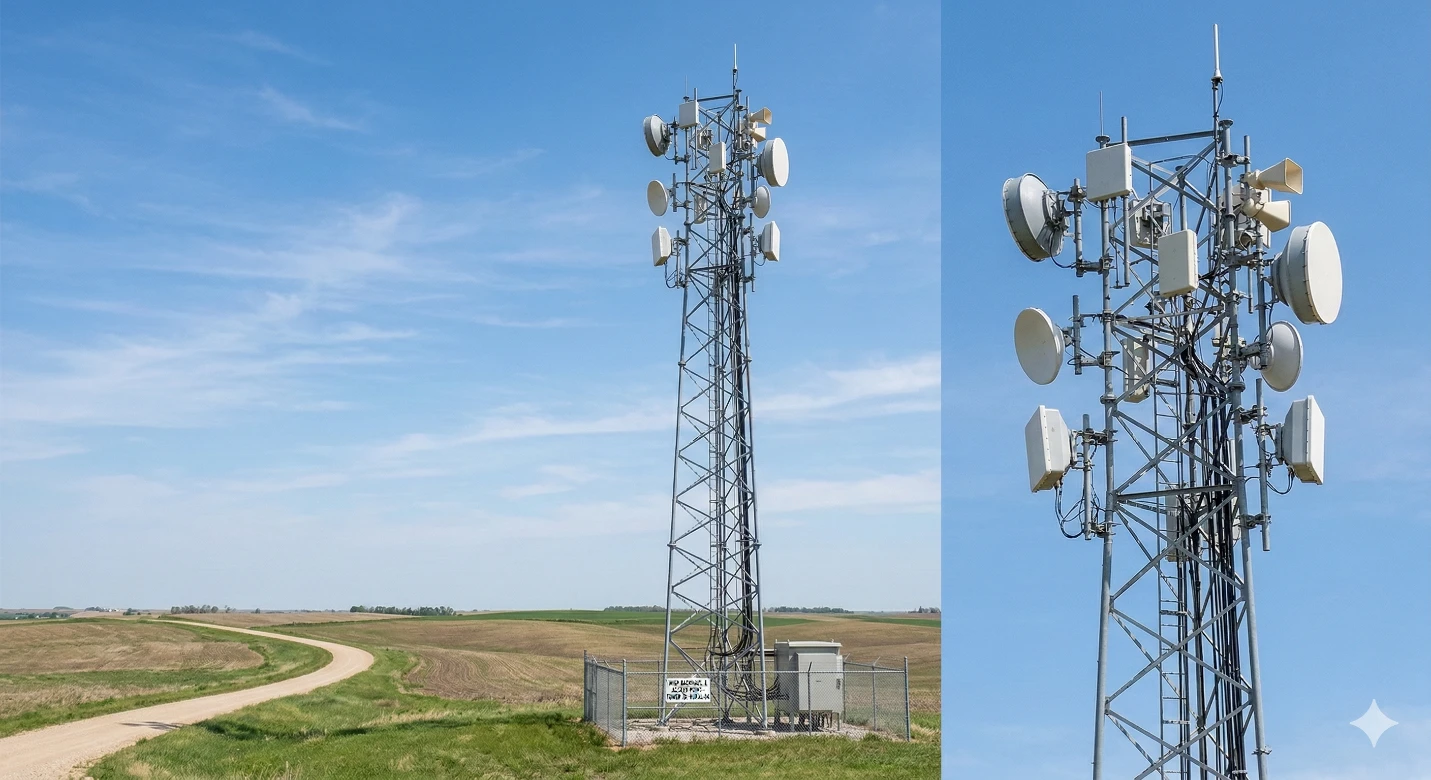
A Tower Used Only by the WISP That Owns It Has Limited Market Value
Here’s the honest truth that most buyers won’t tell you upfront: a tower that serves only your own WISP network — with no outside tenants paying lease income — has limited market value.
Institutional tower investors are in the business of acquiring cash-flowing infrastructure. Their offers are based on the tower cashflow multiple: how many times the annual lease revenue they’re willing to pay for an asset. If there is no outside tenant generating lease income — because you, as the WISP, are both the tower owner and the only user — there’s no lease cashflow to apply a multiple to. Without an established, arm’s-length lease in place, investors have little to underwrite, and offers will reflect that.
A Tower Used Only by the WISP That Owns It Has Limited Market Value
The picture changes significantly when a WISP is sitting on a portfolio of towers — but only under the right conditions.
A collection of towers spread across a region can be attractive to investors for one primary reason: structural capacity for cellular equipment. If your towers are engineered to handle the weight, wind loading, and antenna configuration requirements of cellular equipment, they become potential co-location sites for wireless carriers. In rural and secondary markets, carriers actively seek existing structure on which to mount equipment rather than build new towers from the ground up.
A portfolio of towers that already generates lease income from outside tenants — or that can structurally accommodate cellular loading and sits in markets where carriers are seeking coverage — represents a pipeline of future revenue that investors will pay to acquire. Towers that cannot structurally support cellular loads, or that are sited in areas with no carrier demand, will not command the same premiums.
Before engaging with any buyer, you should have an independent assessment of:
- The structural capacity of each tower (current loading vs. remaining capacity)
- The geographic demand profile — are carriers actively seeking coverage in your market?
- Whether your towers are registered in carrier site-search databases
We help clients answer these questions before they enter any negotiation, so they’re not relying on a buyer’s self-interested assessment.
Tenant Creditworthiness Is a Core Valuation Driver
When a WISP tower does have outside tenants paying lease income, the quality of that income depends heavily on who is paying it and how creditworthy they are.
Institutional buyers underwrite the tenant the same way a lender underwrites a borrower — and the tenant’s financial strength matters directly to the tower cashflow multiple a buyer will apply. A WISP with strong financials, a growing subscriber base, and a track record of on-time payments will support a higher valuation than a smaller operator with a thin balance sheet and uncertain revenue.
This is especially relevant today, when some regional WISPs are facing competitive pressure from fixed wireless access providers and government-subsidized rural broadband programs. If the WISP tenancy is in an uncertain position, that uncertainty flows directly through to how a buyer prices the asset — and how aggressively they discount it.
We review tenant financials as part of our standard pre-sale analysis. If the creditworthiness picture is weak, we’ll tell you — and help you think through whether timing or structure can improve your outcome.
Our Honest Advice: Don’t Sell Unless You Have Positive Cash Flow
We don’t advise clients to sell assets that aren’t generating positive cash flow from tower leases. If your WISP network is the only economic activity on the tower and there is no outside lease income, a sale is unlikely to yield a meaningful return — and may simply hand a buyer an underpriced option on your land and structure.
The better path, in most cases, is to optimize the asset first:
- Pursue co-location with cellular carriers to add lease revenue before a sale
- Ensure your tower is properly permitted, insured, and structurally current
- Assess whether adjacent towers or land rights add portfolio value
Selling too early — before the asset is performing — almost always results in a lower outcome than waiting until the economics are established. Our job is to help you maximize what you receive, not to generate a transaction for its own sake.
If you’re unsure where your WISP towers stand — or if you’ve already received an unsolicited offer and want an independent read on whether it’s fair — we’re happy to provide a confidential, no-obligation assessment.