




Selling Your Cell Tower: Expert Brokerage for Private Tower Owners
Thinking of selling your private cell tower or portfolio? As a tower owner, navigating the specialized telecommunications market is complex. While it remains a seller’s market for high-quality assets, securing a premium price requires expertise to position your tower for the best outcome. SteelTree Partners are expert cell tower brokers who advise owners of communication infrastructure M&A, ensuring you maximize value and secure the best terms for your assets.
Why Buyers Are Wary: The Need for Upside
Today’s tower buyers—including major tower companies—are increasingly sophisticated. They are cautious and will discount or pass on opportunities they consider “distressed” due to a perceived lack of lease-up potential. Buyers are not willing to pay blindly for any tower asset. In 2025-2026, most tower acquisitions will be consummated by the mid-size private tower companies and US-based infrastructure funds.
To command the highest tower valuation, your asset must demonstrate the potential for future growth. Buyers are looking for upside and will pay higher multiples (lower Cap Rates) for assets with a higher probability of adding tenants. A good broker knows how to present your tower assets to a wide range of buyers, emphasizing the positive aspects of the tower or portfolio while acknowledging but downplaying the negative aspects.
What Intelligent Tower Buyers Scrutinize
Buyers focus on key elements that signal the asset’s or portfolio’s long-term viability and growth potential.
-
- Tower Location and Barriers to Entry
The primary indicator of future lease-up is competition and zoning.
-
-
- Zoning Restrictions: Buyers focus heavily on whether local zoning regulations or other barriers would prohibit a new tower from being built nearby.
- Competition: They want assurance that the tower doesn’t have significant competition from other existing towers that could serve a similar purpose for major carriers like AT&T and Verizon.
- The Advantage: Lack of competing structures combined with difficult zoning improves the odds for future co-location.
- Tower Tenants and Lease Quality
-
The existing tenant roster and the quality of their leases are critical to financial stability.
-
-
- Tenant Type: Buyers prefer broadband equivalent tenants (e.g., cellular, government, utilities, FM/TV broadcasters) over narrowband tenants (e.g., paging, WISPs, mobile radio) due to higher expectations of lease longevity for the former.
- Creditworthiness: The creditworthiness of the tenant roster is assessed to determine churn and longevity risk.
- Merger Exposure: Buyers examine exposure to possible terminations from proposed or previous mergers, such as the Sprint/T-Mobile merger, and pay close attention to leases from MetroPCS, Cricket, and Clearwire.
- Favorable Lease Terms
-
Certain clauses significantly affect the tower’s future cash flow and value.
-
-
- Claw Back Clauses: Buyers strongly prefer that the lease does not have a claw-back clause—a provision that reduces the anchor tenant’s rent when subsequent co-locators are added.
- Termination Rights: Leases without termination rights vested in the tenant during each term are highly desirable. Liberal termination rights are disliked, especially where there is no zoning or where competing structures exist.
- Escalation Rates: While older leases tend to have higher escalations, new leases with lower-than-normal escalation rates can damage a portfolio’s value.
- Ground Lease Terms
-
Unfavorable ground lease terms will devalue the tower.
-
- Revenue Share: For obvious reasons, buyers prefer not to share revenue with the landowner. A revenue-sharing provision is a major devaluation factor.
- Term Remaining: A shorter remaining term increases the likelihood that the new tower owner will incur an increased lease rate at expiration.
- Technical Specifications
- Structural Capacity: The assets must have additional structural capacity for co-location or modifications; a lack of it will lead to reduced offers.
How Your Tower is Valued: Multiples vs. Cap Rates
In the tower industry, valuation is based on a multiple of tower cash flow (TCF), which is the inverse of the Capitalization Rate (Cap Rate).
{TCF} = {Gross Revenue} – {Expenses}
- Tower Cash Flow (TCF): This is defined as Gross Revenue minus Expenses (Ground Rent, Utilities, Monitoring, Insurance, Maintenance, and Taxes).
- The Multiple: The multiple is the purchase price divided by the TCF. Assets typically sell for 15X to 40X TCF.
- Cap Rate Conversion: You can easily convert the multiple to a Cap Rate by dividing 100 by the multiple. A 30X multiple, for example, is a 3.3% Cap Rate.
The average Cap Rate for tower sales in our database is just over 4%. SteelTree Partners ensures you get a valuation that reflects today’s market, not yesterday’s.
The SteelTree 140-Day Sales Process
Our competitive closed auction process is designed to deliver the best price and terms.
| Milestones | Duration (Days) | Total Days |
|---|---|---|
| Exclusive Engagement Agreement Executed | N/A | 1 |
| Confidential Offering Memorandum Completed | 14 | 14 |
| Offering Memorandum Distributed | 2 | 16 |
| Initial Bids Due | 14 | 30 |
| Second Round Bids Due | 9 | 39 |
| Buyer Chosen, LOI Entered | 7 | 46 |
| Purchase Agreement Executed | 30 | 76 |
| Inspection Period Concluded | 60 | 136 |
| Closing | 4 | 140 |
Please note that each portfolio is unique. The process above assumes there are no issues during due diligence and your attorney (and the buyer’s attorney) respond promptly. If there are issues negotiating the purchase and sale agreement for the towers, or if the buyer finds problems in their title search or inspections of the towers, the process may take longer.
Contact SteelTree Partners today for a free, confidential, well-informed verbal valuation of your tower or tower portfolio.
Municipal Cell Tower Leases – Can They Be Sold?
Why Selling Municipal Tower Leases Can Be a Bad Idea!
It’s disappointing to see municipalities selling the lease income from their towers to third-party lease buyout companies. Often, municipalities try to auction these leases after being approached by a single lease buyout company, believing they’re acting in their citizens’ best interests. However, this decision often results in undervaluing their tower assets due to a lack of understanding of their options.
Selling a Tower Collocation Lease:
When a lease buyout company purchases a collocation lease on a municipal-owned tower, they acquire the rights to that lease area. If they buy all of the leases on the municipal tower, they typically include language that allows them to add other tenants to the tower and collect 50% of the revenue. Even in situations where they aren’t taking a revenue share from future tenants, the lease buyout companies take the first right to future tenants if an existing tenant on the tower leaves. These companies typically pay 16-18 years’ worth of rent to acquire the leases on the tower.
Versus Selling the Municipal Tower Outright
In contrast, selling communication towers outright typically earns sellers 20-40 times the annual rent for the sale. However, if the municipality sells the leases to a buyout company, they still have to maintain and operate the tower, even without income. If the tower is damaged or destroyed, the municipality must pay for its replacement, despite not receiving any revenue from the sold leases. So, selling to a lease buyout company means losing income while still bearing the operational costs and retaining the obligation to operate the tower on a day-to-day basis: to insure it, to maintain it, to provide utilities, and to operate it.
If the municipality sells the tower itself, it no longer has to pay for or operate it. The tower company taking over would handle insurance, maintenance, utilities, and repairs. Though the municipality would lose future tenant income, it would be much better compensated upfront.
One of the primary concerns that municipalities have about this type of arrangement is that they lose control over the structure where their public safety equipment is
Keeping Rights to Operate Public Safety Equipment
located. However, it is quite common and easy for a municipal tower owner to include language in the sale agreement for the tower that reserves their current and future rights to place public safety equipment on the tower.
Long Term Agreements and Controls
In either scenario, the municipality is binding itself to a long-term agreement. In the case of a lease buyout, the buyout company will take a long-term easement under the leases that can’t be terminated. In the case of the outright sale of the tower, the tower purchaser will either take a long-term easement or a long-term nominal value lease. In both scenarios, the municipality is losing control of its asset. The difference is in who bears the future operating expenses and risks.
Why Choose SteelTree Partners – How We Can Help
SteelTree Partners understands that selling a municipal tower is not right for all municipalities. However, in some cases, the municipality must generate capital without raising taxes. SteelTree Partners rarely sees situations where selling the leases separately from the tower is beneficial. If your municipality is contemplating the sale of municipal tower leases or a municipal cell tower, contact SteelTree Partners for a free consultation about the value of your communication tower. After collecting some data about your tower, SteelTree Partners will provide a free verbal estimate of the value of the structure. We will evaluate your tower and provide a free verbal estimate of its value and guidance on whether selling the tower asset or lease is appropriate. We also review how best to meet your goals.
Selling Broadcast Towers | SteelTree Partners
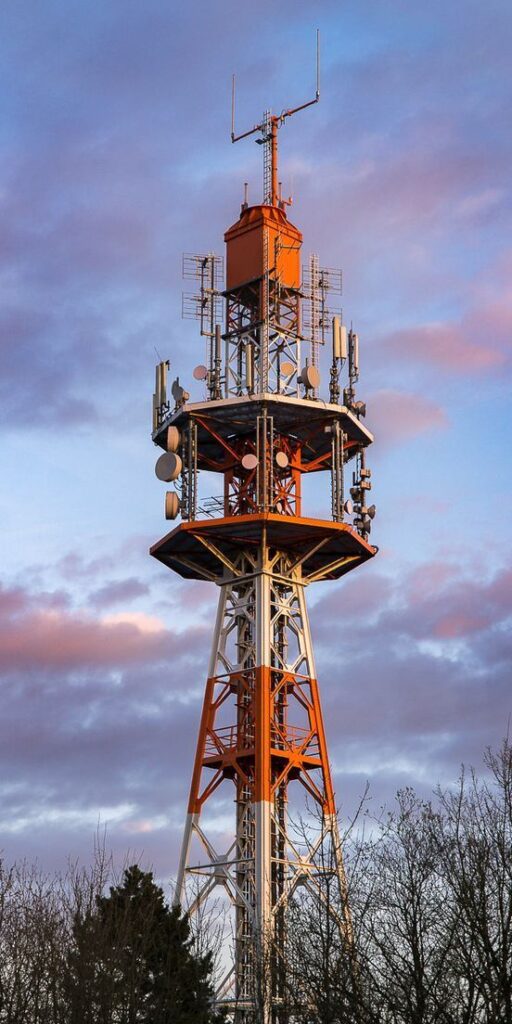
In the last ten years, many tower companies have been reaching out to AM, FM, and TV broadcasters with offers to purchase their broadcast towers. The tower companies “dial for dollars”, contacting broadcasters directly using FCC registration data. Or a separate broker may reach out to the broadcaster, claiming they can get high prices if the broadcaster will let them sell the tower. Some brokers do not really broker towers; they have pre-existing relationships where they push the seller to one specific buyer. The seller may think they are getting the highest purchase price for their broadcast tower(s), but they will not really know because the broker didn’t distribute the offering widely.
The tower companies like to target broadcasters for the following reasons: First, with the downturn in station valuations in the last few years, some broadcasters are looking for capital to fund expansion or pay operating expenses. Second, broadcasters have started to realize that the broadcast tower itself is a non-core asset. Third, some broadcasters (especially smaller ones) tend to know little about tower valuations and thus make attractive targets. Fourth, many broadcast towers were built in urban or
Why Tower Companies Seek to Buy Broadcast Towers
suburban areas and have multiple cellular subleases.
How To Sell a Tower but Keep Broadcasting
The typical transaction is done via a “sale and leaseback.” A “sale and leaseback” is where the tower company purchases the tower but enters into a long-term lease with the broadcaster to continue broadcasting from the tower. The parties negotiate the rent for the lease. A higher lease rate typically yields a higher purchase price for the tower but also commits the broadcaster to higher operating expenditures. A lower lease rate reduces the purchase price while also limiting future costs.
How Broadcast Towers Are Valued
Broadcast towers, like most tower assets, are valued on what is known as a multiplier of annual “tower cash flow.” Put simply, tower cash flow is rental revenue minus expenses. Expenses typically include insurance, taxes, ground rent, maintenance, utilities, and monitoring expenses. The multiple to be used varies depending upon the type of tenants on the tower and the credit quality. For the sale and leaseback of broadcast towers, buyers look closely at the creditworthiness of the broadcaster to determine the multiplier. Multipliers for annual tower cash flow generally range from 10 to 30 times.
How SteelTree Helps Broadcasters Get the Best Deal
If one of these tower companies has contacted you with an unsolicited offer, you should be aware that the offer is almost certainly below market. You should also recognize that the tower companies’ default purchase agreement is written entirely in their favor.
If you are a broadcaster looking to monetize tower assets or you own a tower with broadcast tenants, contact SteelTree about the best way to maximize value with the fewest liabilities. We will protect your long-term interests in the context of a well-executed lease-back arrangement. We understand the nuances of the broadcast tower asset class and know the companies that are eager to purchase them at the highest price.
Don’t be one of those broadcasters who ends up having to move off the tower they used to own because they didn’t know what they were doing. Don’t trust a broker who contacts you out of the blue and promises you a specific amount. Each broadcast tower is unique, and we will help you find out which buyer has the most interest and best terms and conditions.

WISP Tower Owners & Cell Sites
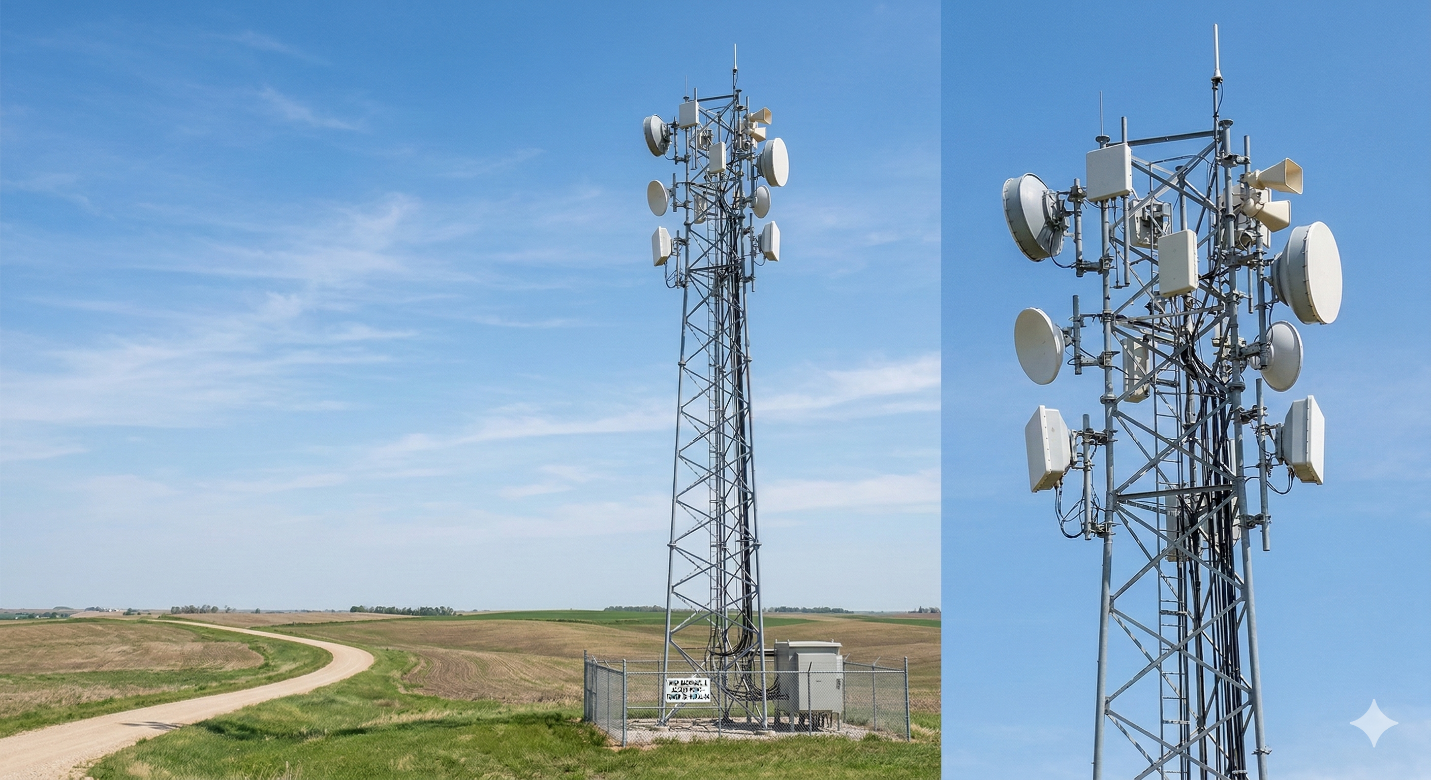
A Tower Used Only by the WISP That Owns It Has Limited Market Value
Here’s the honest truth that most buyers won’t tell you upfront: a tower that serves only your own WISP network — with no outside tenants paying lease income — has limited market value.
Institutional tower investors are in the business of acquiring cash-flowing infrastructure. Their offers are based on the tower cashflow multiple: how many times the annual lease revenue they’re willing to pay for an asset. If there is no outside tenant generating lease income — because you, as the WISP, are both the tower owner and the only user — there’s no lease cashflow to apply a multiple to. Without an established, arm’s-length lease in place, investors have little to underwrite, and offers will reflect that.
A Tower Used Only by the WISP That Owns It Has Limited Market Value
The picture changes significantly when a WISP is sitting on a portfolio of towers — but only under the right conditions.
A collection of towers spread across a region can be attractive to investors for one primary reason: structural capacity for cellular equipment. If your towers are engineered to handle the weight, wind loading, and antenna configuration requirements of cellular equipment, they become potential co-location sites for wireless carriers. In rural and secondary markets, carriers actively seek existing structure on which to mount equipment rather than build new towers from the ground up.
A portfolio of towers that already generates lease income from outside tenants — or that can structurally accommodate cellular loading and sits in markets where carriers are seeking coverage — represents a pipeline of future revenue that investors will pay to acquire. Towers that cannot structurally support cellular loads, or that are sited in areas with no carrier demand, will not command the same premiums.
Before engaging with any buyer, you should have an independent assessment of:
- The structural capacity of each tower (current loading vs. remaining capacity)
- The geographic demand profile — are carriers actively seeking coverage in your market?
- Whether your towers are registered in carrier site-search databases
We help clients answer these questions before they enter any negotiation, so they’re not relying on a buyer’s self-interested assessment.
Tenant Creditworthiness Is a Core Valuation Driver
When a WISP tower does have outside tenants paying lease income, the quality of that income depends heavily on who is paying it and how creditworthy they are.
Institutional buyers underwrite the tenant the same way a lender underwrites a borrower — and the tenant’s financial strength matters directly to the tower cashflow multiple a buyer will apply. A WISP with strong financials, a growing subscriber base, and a track record of on-time payments will support a higher valuation than a smaller operator with a thin balance sheet and uncertain revenue.
This is especially relevant today, when some regional WISPs are facing competitive pressure from fixed wireless access providers and government-subsidized rural broadband programs. If the WISP tenancy is in an uncertain position, that uncertainty flows directly through to how a buyer prices the asset — and how aggressively they discount it.
We review tenant financials as part of our standard pre-sale analysis. If the creditworthiness picture is weak, we’ll tell you — and help you think through whether timing or structure can improve your outcome.
Our Honest Advice: Don’t Sell Unless You Have Positive Cash Flow
We don’t advise clients to sell assets that aren’t generating positive cash flow from tower leases. If your WISP network is the only economic activity on the tower and there is no outside lease income, a sale is unlikely to yield a meaningful return — and may simply hand a buyer an underpriced option on your land and structure.
The better path, in most cases, is to optimize the asset first:
- Pursue co-location with cellular carriers to add lease revenue before a sale
- Ensure your tower is properly permitted, insured, and structurally current
- Assess whether adjacent towers or land rights add portfolio value
Selling too early — before the asset is performing — almost always results in a lower outcome than waiting until the economics are established. Our job is to help you maximize what you receive, not to generate a transaction for its own sake.
If you’re unsure where your WISP towers stand — or if you’ve already received an unsolicited offer and want an independent read on whether it’s fair — we’re happy to provide a confidential, no-obligation assessment.