It is likely too early for most tower owners to start looking for checks in your mailbox- but that doens't mean you can start to plan for the possibility.
There's been no shortage of talk about tower sites as the natural home for edge compute, battery storage, and distributed energy generation. The logic is straightforward — tower sites are already powered, fenced, and connected to fiber, and they're distributed across exactly the geographies where low-latency compute and grid resilience matter. The opportunity is real. The timeline is not.
Edge Data Centers
On edge data centers specifically: our best estimate is that there are somewhere between 30 and 50 true edge deployments at tower sites in the U.S. today. American Tower has been candid about what their threshold looks like — at least 2.5 acres, flat, outside a floodplain, with adequate fiber and power. The average cell tower compound is under a quarter of an acre. Very few sites qualify, and the ones that do tend to be in legacy broadcast tower portfolios with larger parcels and heavier utility infrastructure already in place. For most tower owners, edge compute is a decade-long transition story, not a near-term line item.
Battery Storage and Energy Generation
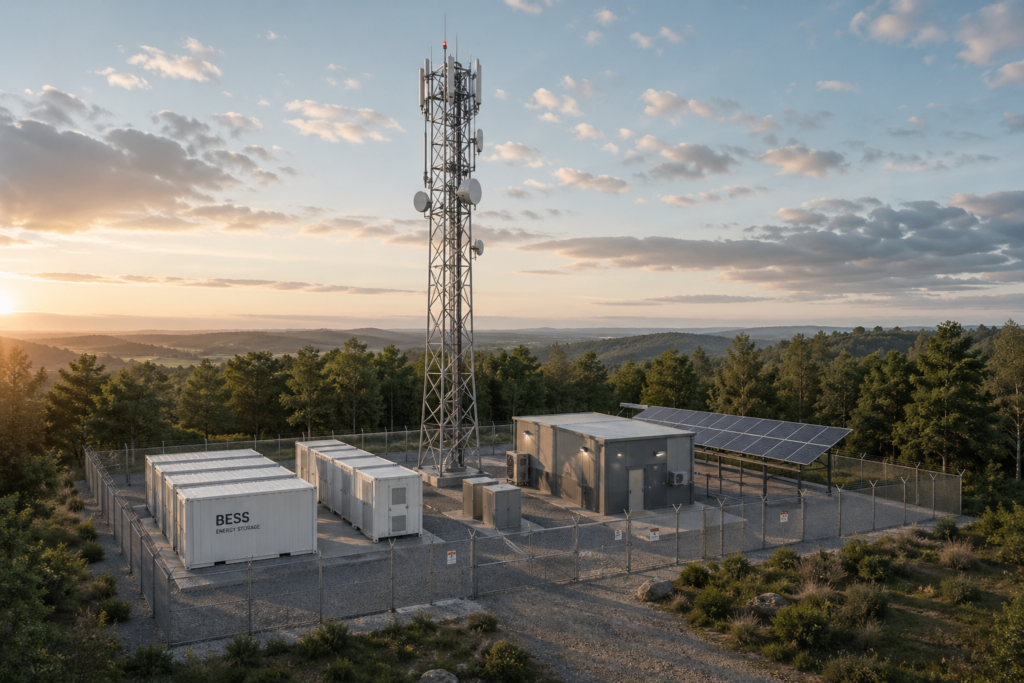
Battery energy storage systems (BESS) and energy generation are further along, but still site-specific. The economics work in certain markets — particularly where carriers are paying for grid reliability or where energy arbitrage is favorable. They don't work everywhere. The deployment bar is lower than edge compute, but BESS carries its own risks, including fire and environmental liability, that require careful planning before you commit.
None of this means you should ignore these opportunities. It means you shouldn't build a financial model around them until you have a specific site, a specific operator, and a specific deal in front of you.
What You Should Do Right Now
What you should do right now is make sure your ground leases don't get in the way when the time comes.
Tower companies have learned — the hard way — that narrow permitted use language becomes a negotiating liability. A lease that limits use to "a communications tower and related equipment" gives a landowner legitimate grounds to push back when you want to add a BESS installation or a solar array. Getting that permission after the fact costs money and time, and some landowners will use it as leverage for a rent renegotiation you didn't plan for.
The fix is simple: make sure your permitted use language is broad enough to cover what you might reasonably want to do over a 50-year lease term. That means enumerating solar generation, battery storage, backup power, edge compute infrastructure, and the utility and access rights needed to support all of it. Not because you're deploying any of this tomorrow. Because the option to deploy it should be yours, not your landlord's to grant or withhold.
Don't count your eggs before they hatch. But don't sign leases that make it harder to hatch them either.
SteelTree Partners advises tower owners and investors on portfolio strategy, acquisition due diligence, and transaction execution. Contact us to discuss how lease language affects your portfolio's long-term value.